Rosario SF
The city as interface: avant-gardes, scientific strength, cooperative technologies and a three-hundred-year relationship with the same river.
A city on the bluffs
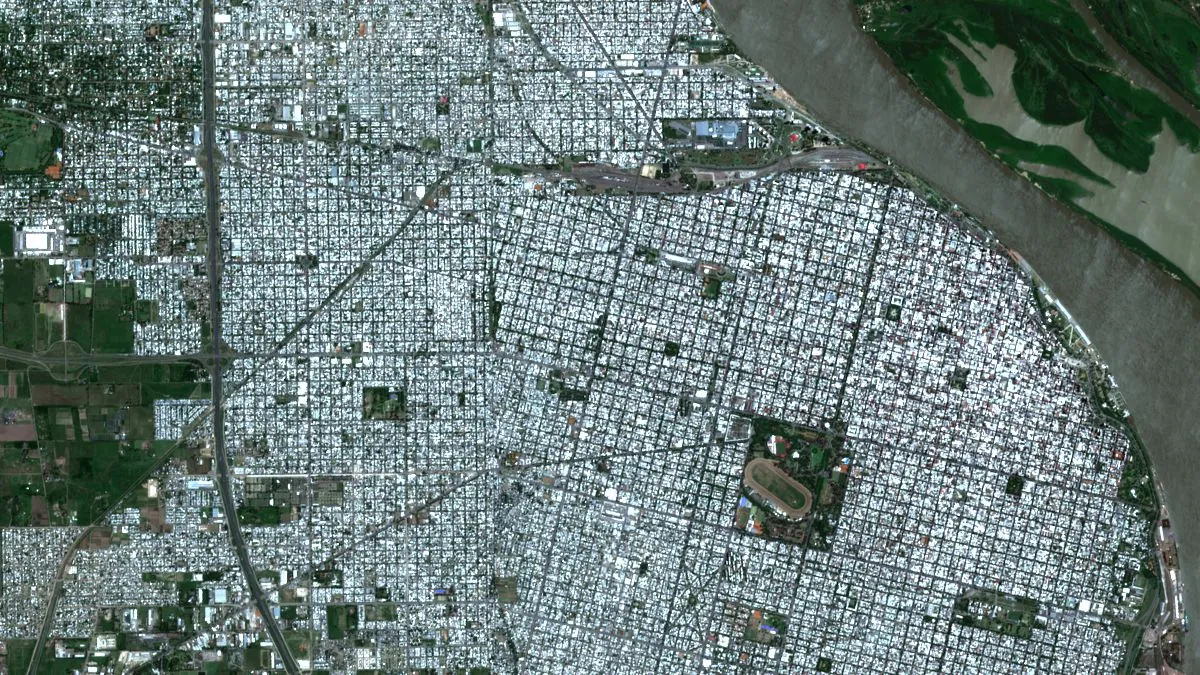
Rosario sits on the high bluff of the Paraná, facing a system of islands, streams and lagoons that belongs administratively to another province and culturally to the same life. That geometry —city on one side, wetland on the other— explains much of how public space is thought about here.
The riverfront, reclaimed from port use over recent decades, is today a continuous strip of parks, museums and converted warehouses. The Biennial takes it as its backbone: the River Strip is not the backdrop of the event, it is its channel.
Avant-gardes that took to the streets
The city has built up a tradition of experimentation that did not stay inside the museum. Lucio Fontana was born here. Antonio Berni worked here. In 1968, Rosario’s avant-garde artists’ group staged Tucumán Arde, a work made of research, counter-information and collective montage that remains an international reference.
That history is why a territorially distributed biennial does not sound like a curatorial trend here: it is the continuation of a way of working.
Scientific and technological strength
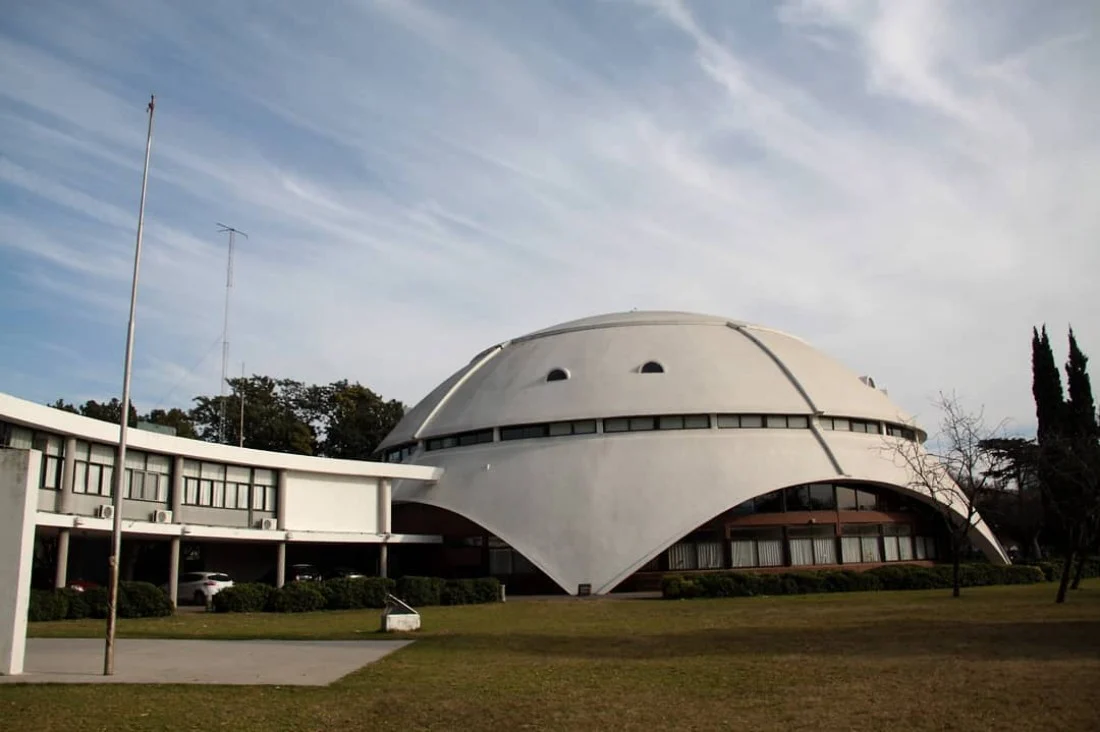
The Biennial builds on an existing ecosystem of research, culture and development that works cooperatively.
Ecosystem
National University of Rosario
One of the largest public universities in the country. With 13 faculties and more than 3,400 researchers —60% of them women— UNR stands out for its innovative regional track record, such as being the first university in Argentina and in all of Latin America to offer a degree in Biotechnology as part of its academic offering.
Ecosystem
CCT CONICET Rosario
The Center promotes, supports and strengthens the city’s international positioning as a hub for biotechnology, agri-environmental studies, design and the humanities.
Ecosystem
Technology hub and tech-based companies
A software and services sector with a strong regional presence and experience in public-private cooperation projects.
Ecosystem
Public management of public space
Decades of sustained urban policy along the riverfront, the decentralized districts and local cultural programs.
Want to join in co-creating the Biennial?
Write to us:
- If you represent a city, an institution, a research team or an artistic collective and are interested in collaborating.
- If you would like to take part as a sponsor, endorser or supporter of the Biennial.
- Or if you simply want to keep up with the event's news.